
Shopping for Carpet
Carpet lingo is a different language

There are some feelings that are synonymous with a renovation. One is stress, and the other is anxiety. If you think about it, this makes perfect sense: you’re making a number of costly decisions.
Much like with buying a house or buying a car, there are long-term ramifications, and you will have to live with the decision that you make. This makes it all the more challenging to make “the right” decision.
One of the big decisions I have to make is about carpet.
The measurements we’ve had vary (which is kind of crazy if you think about it), but approximately 1,200 square feet (about half of our house) needs new carpet.
(Before you tell me we could do wood or LVP, most of this space is upstairs and I don’t want to have to deal with loud kids in the rec room. Also kids are not gentle on wood floors.)
Picking a Carpet Style
As with any design decision in our home, I began by asking my husband if he had an opinion (I’ve never really bought into the idea that the husband’s taste/style/input is irrelevant). He told me that as long as it wasn’t red (yes, really), he didn’t have any strong opinions (notably he did have other opinions, just not strong ones).
The simplest thing to do with the carpet would have been to attempt to match what remains elsewhere in the house. I had no desire to do that.
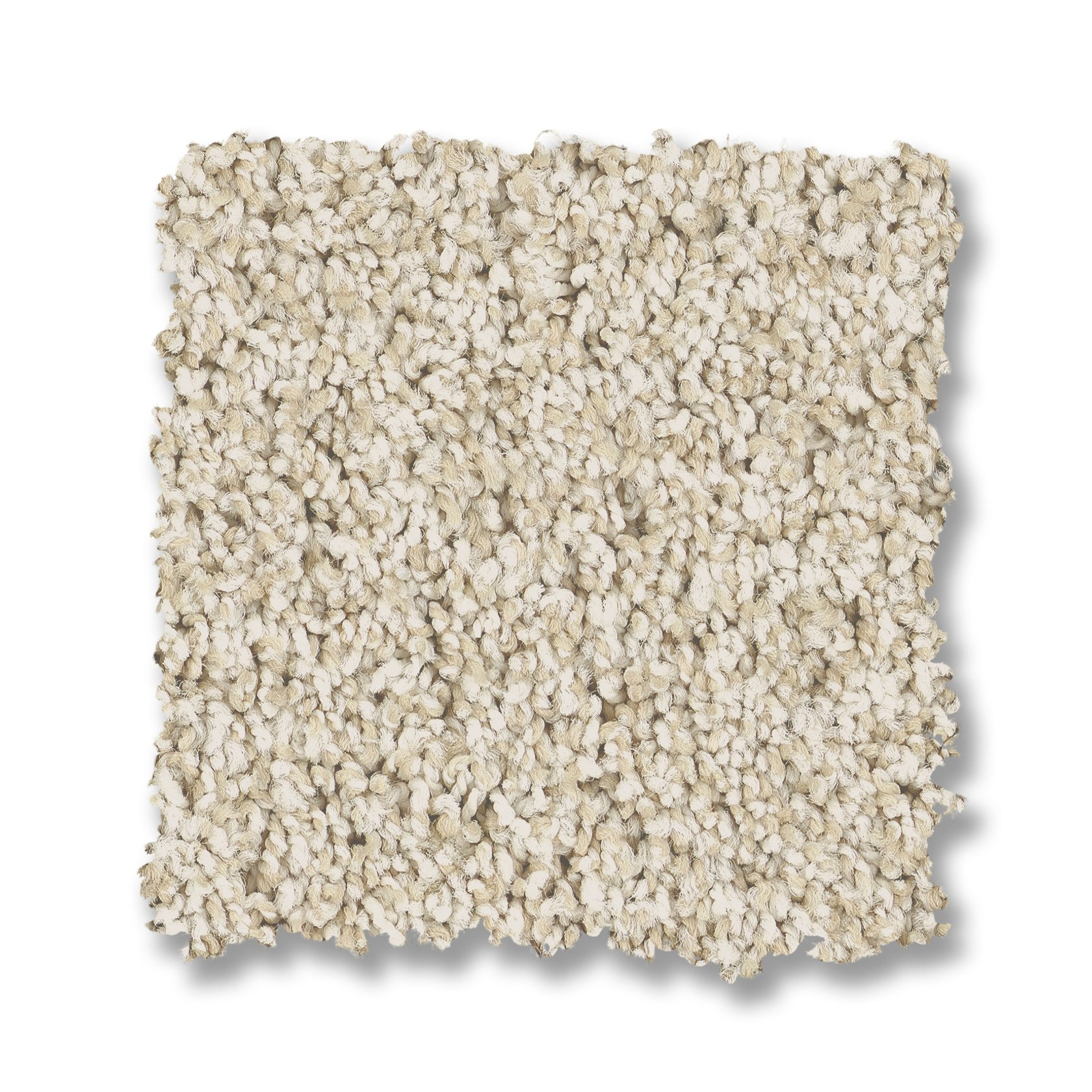
The carpet that came with the house is what is known as a low, cut pile, low-medium face weight nylon carpet (don’t worry, I’ll define these terms below in a minute). It is typical home builder fare, so if you buy a spec-built home from a local builder and it is carpeted, this is likely the type of carpet they are offering you. There is nothing inherently wrong with this carpet, but it is not my preferred choice (see above image for reference).
I always tell my clients to invest in high-touch items. Carpet is a high-touch item. Just like toilet paper, if you have to use it daily, you don’t want that interaction with it to be unpleasant. I don’t want our carpet to be cheap and scratchy, and I also don’t want it to look like that sample above. Before we get into looks though, let’s explore some lingo.
Basic Carpet Lingo
Here is some much-needed (but not comprehensive) carpet lingo if you ever find yourself in the market for a new carpet:
Fibre/fiber: The material the carpet is made from. Common fibres include wool and sisal (naturals), and nylon, polyester, polypropylene, PET, solution-dyed nylon, and solution-dyed polyester (synthetics).
Pile height: This refers to the height from the carpet backing to the top surface of the fibres. A low pile (~6mm) is shorter and flatter, a high pile (12mm+) is usually longer, thicker, and plusher.
Loop pile: A carpet made of fibres woven into loops.
Cut pile: A carpet made of fibres that were looped and then cut— really common in residential batch built homes.
Face weight: This refers to the weight of one square yard of carpet (backing excluded) in oz. A 50+ oz face weight is going to result in a more resilient and durable carpet.
Weight: The weight of one square yard of carpet including backing, density, etc.
Density: How closely the fibres are packed together against the backing. Higher density = stronger and better at keeping dust out.
Applications: Where the carpet is suitable to be used (commercial vs residential)
Loop types: Level loop (all loops the same height), multi-level loop (loops at various heights), berber loop (wobbly loops, inconsistent loops). It goes without saying there are more styles and types than this, but armed with this you should be able to find what you’re looking for.
Carpet Vision
I knew going into this what I liked, because I know my design principles and how they apply in a situation like this. Here’s what I wanted:
Wool fibre
Medium pile height
Loop pile
Face weight ~40 oz.
Natural colour (brown)
No pattern, neat “rows”
Basically, I wanted this:


Remember the renovation anxiety I mentioned earlier? I think one of the key ways around it is to work with a local expert.
Small businesses need good reviews. People who have been doing the same work for 20 or 30+ years are going to be some of the most reliable people you could choose to work with. Possible limitations might be that they are a bit old-fashioned, or have some ideas about design that are different to yours, but when it comes to the work that is performed in your home and real honest advice about the products you’re using, these are the people that you want to work with.
Even if you’re working with a product that isn’t locally available, working with a local company who can source that for you gives you a bit more control, and a lot more safety. Face-to-face relationships matter so much when you’re doing this kind of project.
Armed with that understanding, I reached out first to two local vendors: Boyd’s Carpets and Full Service Flooring.
Boyd’s didn’t offer any wool products, but I found one item that fit my other terms and came at a great price.
Full Service Flooring had a wider selection of fibres, and I fell in love with *many* carpets.
Here’s what you need to know when shopping for carpet:
The way you see the sample online is going to vary from the way you experience it in person. Go to the store. Touch it. Check the colour works in situ.
Just because it’s a blend doesn’t make it cheaper (sometimes it can be more expensive!)
The cost per square foot or per square yard is not the only thing influencing the price you’re going to pay. You’ll also pay for labor and the carpet pad, so make sure to factor that into your budget. (FYI: Some carpets cost more than others to install).
Don’t be afraid to go to multiple carpet vendors - they’ll carry different brands and may also vary on prices of labor.
This won’t come as a surprise to anyone, but my favourite carpets were the ones that far exceeded our allowance. Our contractor had given us around $4,700 for carpet, our insurance had given us slightly more, at $5,625. Both numbers cover both carpet and labor/install.


My favourite carpet (Stoneridge from Nourtex by Nourison) put me over quite a bit ($9,053.29 for carpet + labor/install). My second favourite (Dakota from Nourtex by Nourison) put me over by a little less, but still a lot ($7,824.96). I really hesitated about whether or not to “just do it”, but I didn’t want our entire contingency fund to be eaten up by carpet. In the end I decided the Callaway II carpet from Boyd’s Carpet would be best. It’s not wool, but it’s the best look and feel for the best price.
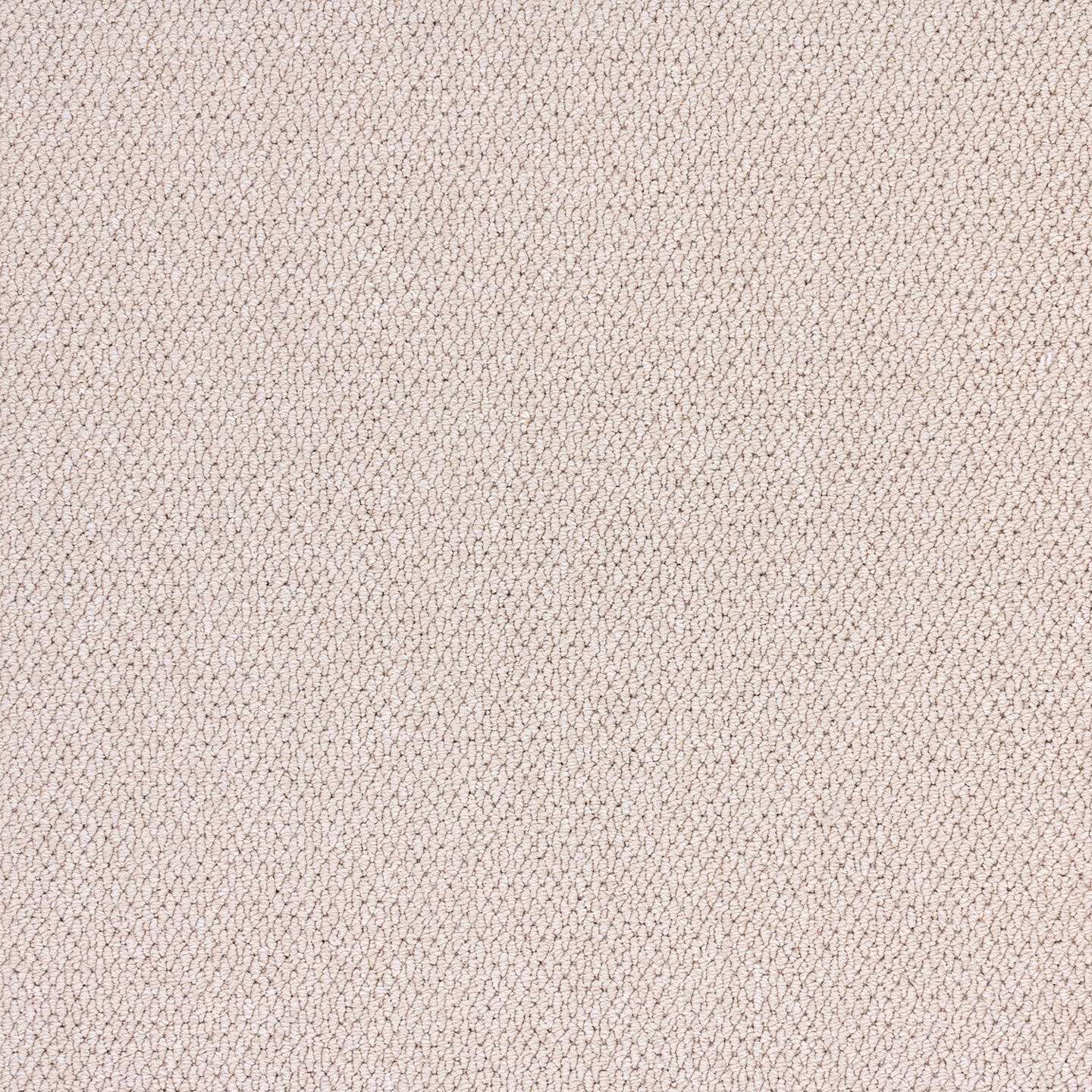
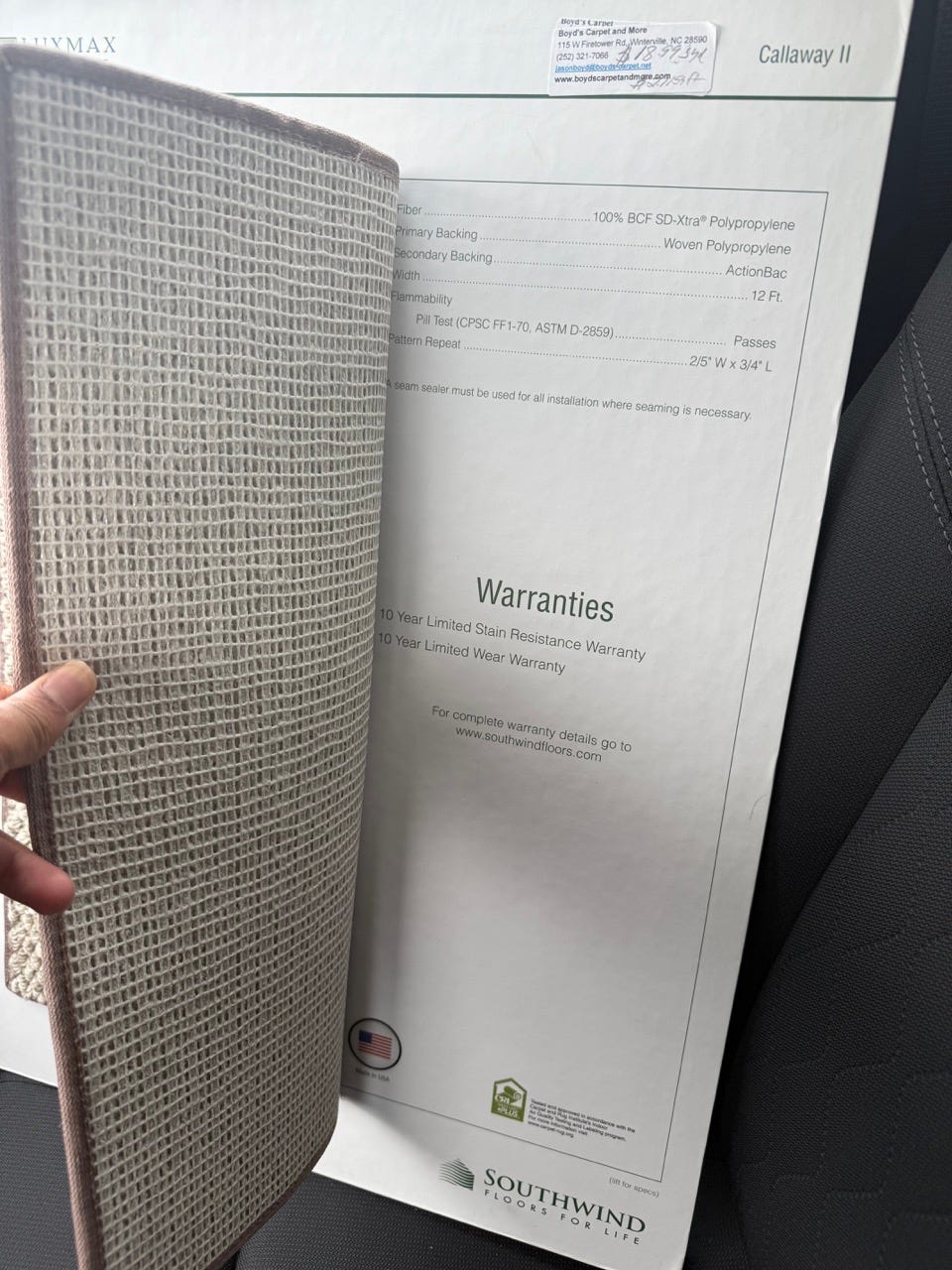
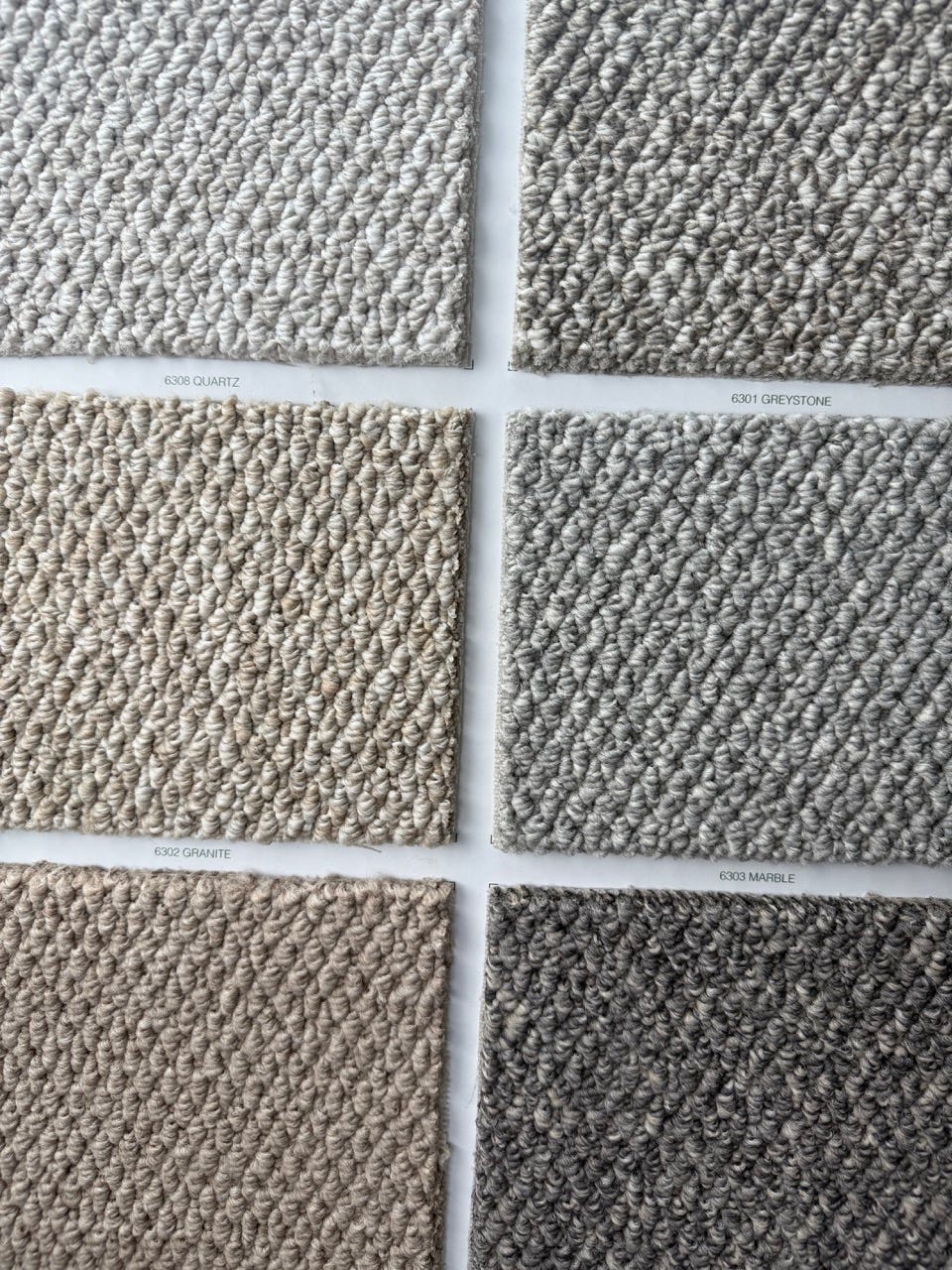
Callaway II by Southwind Floors - specs:
Cost: $18.99 per square yard (current estimate: $5,144.08, although this may be more than we need)
Fibre: Solution-dyed polypropylene
Colour: Oakwood (the most similar to a natural wool colour)
Face weight: 32 oz.
A Quick Note on Compromise
It’s easy to feel like a failure when you can’t get “the dream” item you’re after. Don’t. Compromise is a necessary part of a renovation. So you don’t need to feel bad about that.
Compromise is a necessary part of a renovation.
Instead, what you need to do is make sure you don’t compromise on things that matter most. In our case, what mattered most to me was the feel, the look, the durability, and the cost. The actual fibre mattered less to me than the feel and look it gave, so not being wool or 40 oz. face weight was a compromise I was willing to make if I was still able to get the feel, look, and durability, and it came in on budget.
The lesson here is this: Making the right compromise is what matters most.
We’ll see the final numbers soon (they’re measuring this week), but next up is tile.
Send prayers people, I’ll see you next week!